
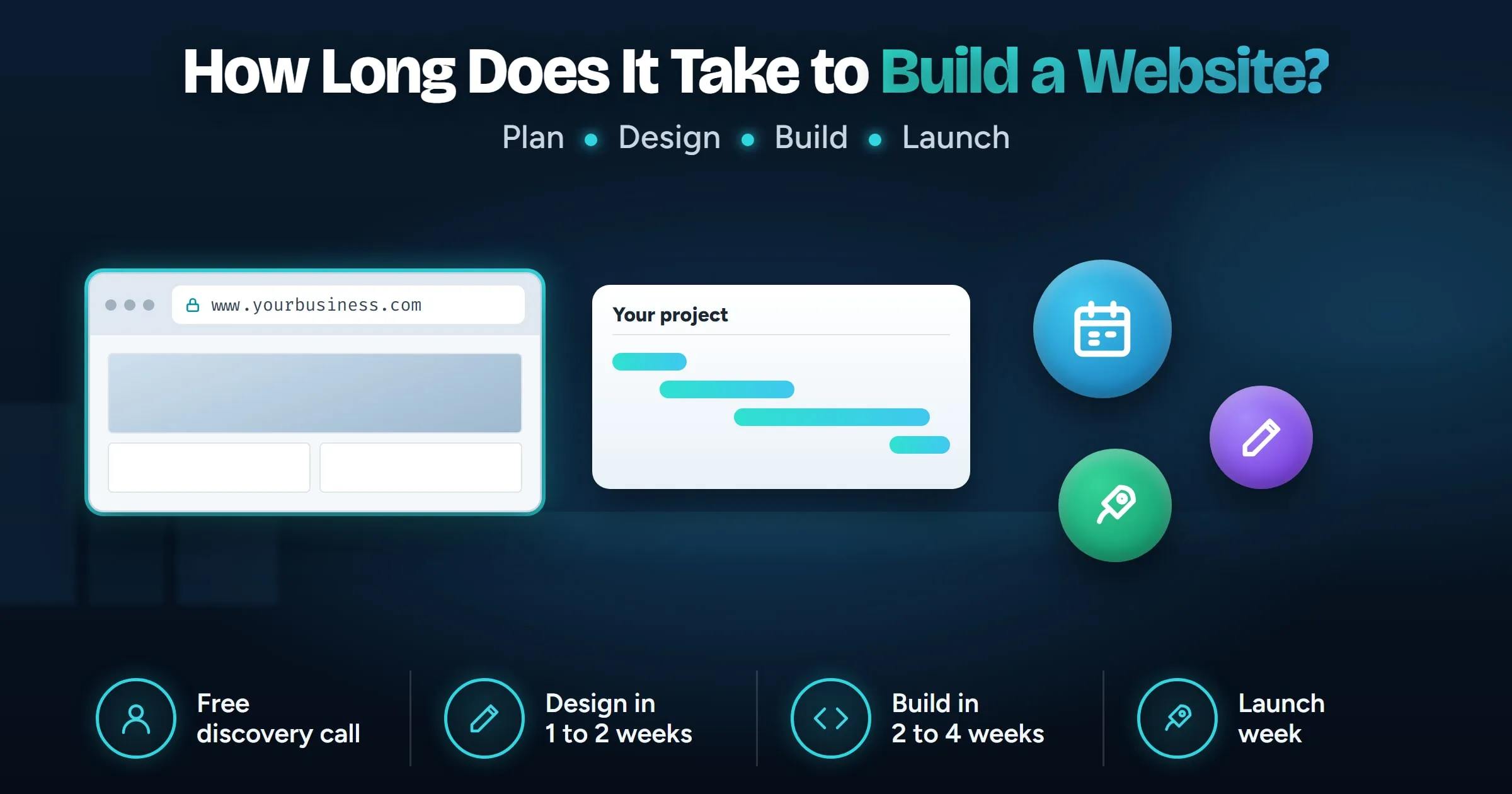
How long does it take to build a website?
A custom small business website usually takes three to six weeks from the first call to launch. Planning and a proposal take a few days, design takes one to two weeks, and building and testing take two to four weeks. The biggest delays come from content: copy, photos and feedback that arrive late.
Last updated
In this guide
A custom small business website usually takes three to six weeks from the first call to launch. That covers a few days of planning, one to two weeks of design, and two to four weeks of building and testing. The technical work is rarely what slows a project down. Late content is: copy, photos and feedback that arrive after they are needed.
How long does each stage take?
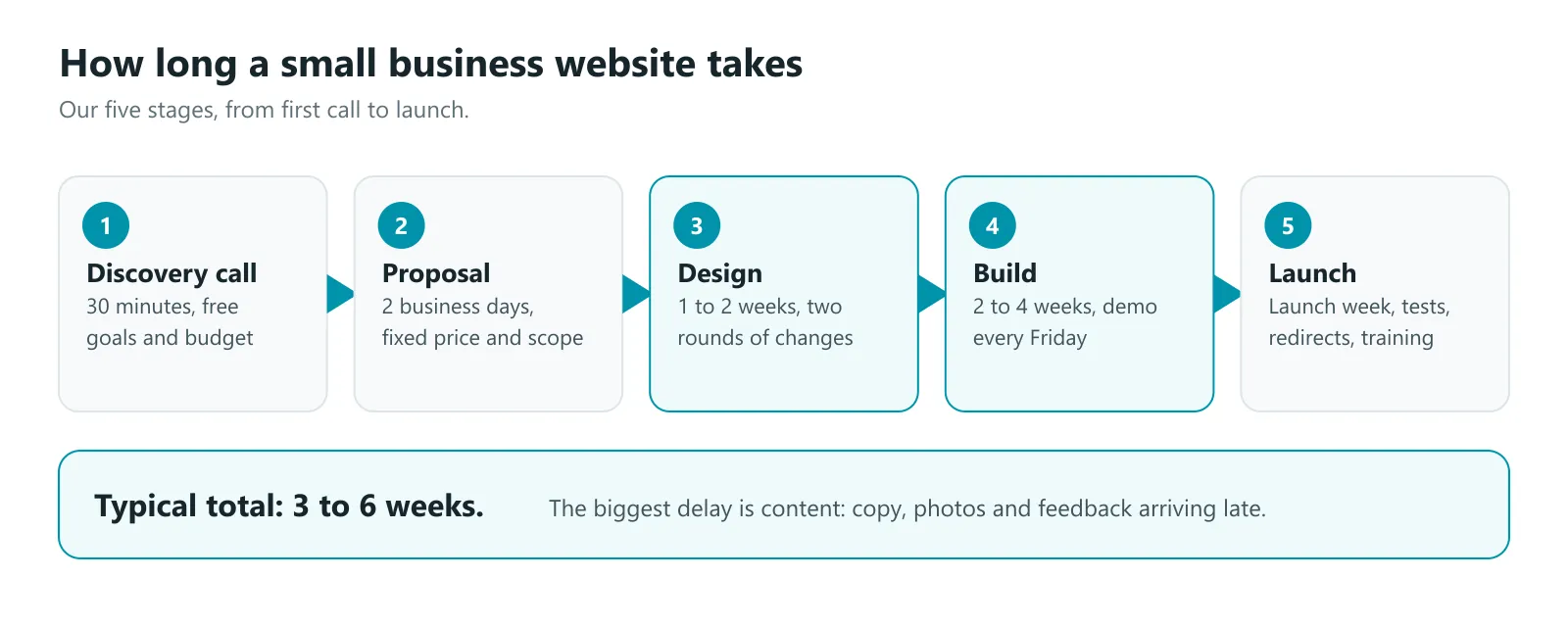
These are the stages we follow on every website project, with the time each one usually takes.
| Stage | Typical time | What happens |
|---|---|---|
| Discovery call | 30 minutes | Goals, customers, budget and what is not working today |
| Audit and proposal | 2 business days | A fixed price, a clear scope and a timeline in writing |
| Design and plan | 1 to 2 weeks | Sitemap and page designs you can click through, with two rounds of changes |
| Build and weekly review | 2 to 4 weeks | Built on a private staging link, with a short demo every Friday |
| Launch and handover | Launch week | Testing on real devices, redirects, analytics, go live, training |
The planning stage matters more than it looks. The sitemap decides your page structure and addresses, which Google’s SEO Starter Guide names among the basics of helping search engines understand a site, and changing them after launch costs far more time.
Add those together and most sites land between three and six weeks. Where yours falls depends mostly on the number of pages, the features it needs, and how quickly content and feedback come back.
What makes a website take longer?
Content arriving late. Design works best with real words and photos, and building needs them to finish pages. If copy, photos or product details are still being written in week four, launch moves with them.
Slow feedback. Every round of review that waits a week adds a week. Short, regular check-ins keep things moving. That is why we demo progress every Friday, so feedback lands while it is still cheap to act on.
Changes in scope. New pages or features added halfway through are normal, but each one needs designing, building and testing. Listing everything up front, including what is not included, avoids surprises on both sides.
Integrations. Booking systems, CRMs, payment providers and custom forms each need setting up, connecting and testing. They are worth it, but they add time.
Online stores. Products, variations, shipping rules, taxes and order emails all need configuring and testing with real orders. The number of products, and how much detail each needs, is usually the deciding factor.
Access. Waiting on domain logins, hosting details or the old developer’s credentials can stall a launch at the very end. Gather them early.
How do you keep a website project on schedule?
- Start content on day one. Begin writing your service descriptions and choosing photos as soon as the proposal is agreed, not when the designs are ready.
- Name one decision maker. Projects slow down when feedback has to go round several people. One person who collects opinions and gives the final answer keeps things moving.
- Block time for reviews. On our projects, that means 15 to 30 minutes each Friday to watch the demo and reply.
- Agree the scope in writing. A fixed scope and price makes it clear what is part of this launch and what can come after.
- Launch, then improve. A site that is live and bringing in calls beats a perfect site still in progress. Extra pages and features can follow in a second phase.
Is a DIY website builder faster?
A website builder template can go live in days if you write the content yourself and accept the template’s layout. That can be the right call for a brand new business testing an idea.
The trade-off is time spent later. You do the writing, the setup and the fixes yourself, and a template is not built around your customers or your local search terms. A custom site takes a few weeks longer to launch, but it is planned around what your customers need to see before they call. We cover the full process on our small business website design page.
What happens after launch?
Launch week includes testing on real phones and computers, including speed. Google’s Core Web Vitals give clear targets, such as the main content of a page appearing within 2.5 seconds. Launch week also covers setting up redirects from any old pages so you keep your search traffic, and connecting analytics and Search Console. You get every login, the code and a recorded walkthrough so you can edit the site yourself.
After that, a site needs regular care: updates, backups and monitoring. Our guide on what website maintenance includes explains what that involves and when it is worth handing over.
Next steps
If you are planning a new website or a redesign, the fastest way to an accurate timeline is a short call about what you need. Book a free 30 minute call and you will have a fixed-price plan with a timeline within two business days.
Sources
- SEO Starter Guide, Google Search Central
- Web Vitals, web.dev by Google